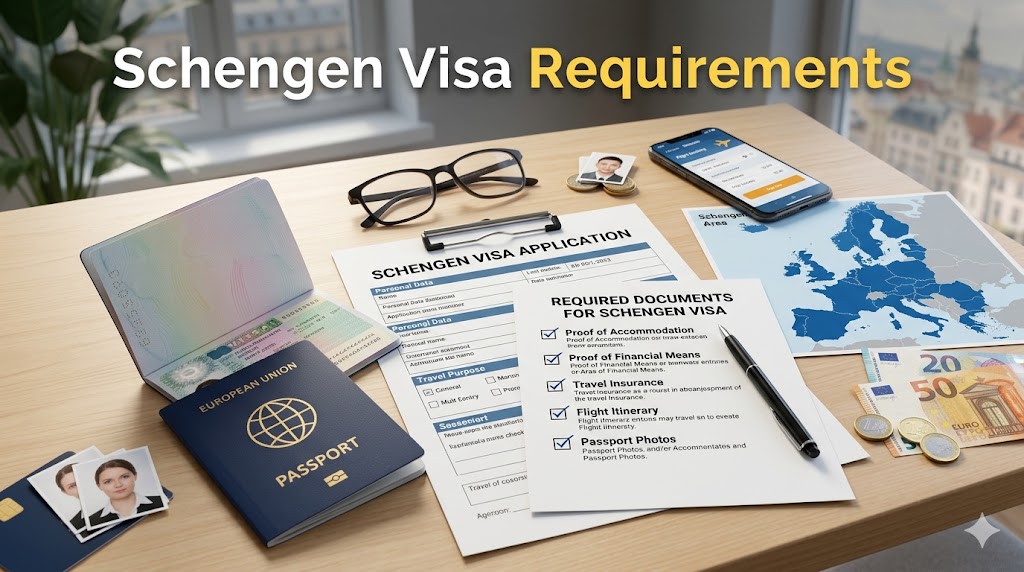
If you’re planning to visit Europe for tourism, business, family visits, short courses, or other temporary purposes, understanding Schengen visa requirements is one of the most important first steps.
For many first-time applicants—especially from countries like Nigeria, Ghana, India, Pakistan, and other non-Schengen nations—the process can feel confusing. Multiple countries, embassy appointments, documentation, travel insurance, proof of funds—it can seem overwhelming.
But once you understand the exact requirements, your application becomes much easier.
This guide explains everything you need to know about Schengen visa requirements, documents, eligibility, application steps, and common reasons for rejection.
Table of Contents
What Is a Schengen Visa?
A Schengen visa is a short-stay visa that allows eligible travelers to visit countries within the Schengen Area for a limited period, generally for tourism, family visits, business trips, or short-term activities.
Common Schengen countries include:
- Spain
- Germany
- France
- Italy
- Netherlands
- Belgium
- Switzerland
- Greece
- Portugal
- Austria
A Schengen visa is typically for short stays, not long-term immigration.
Who Needs a Schengen Visa?
If your country does not have visa-free access to the Schengen Area, you will usually need to apply before travel.
Common applicants:
- Tourists
- Students attending short programs
- Business travelers
- Family visitors
- Conference attendees
Main Schengen Visa Requirements (2026)
Below are the most common core requirements.
1. Valid Passport
Your passport is one of the first things embassies examine.
- Your passport should generally:
- Be valid beyond your intended stay
- Have recent issue dates where applicable
- Include blank pages for visa stamps
- Be in good physical condition
2. Completed Visa Application Form
You must fill out the Schengen visa application form accurately.
- Common mistakes:
- Name mismatches
- Wrong passport number
- Incorrect travel dates
- Missing signatures
Your form must match your supporting documents exactly.
3. Passport-Sized Photos
Applicants usually need recent biometric-compliant photos.
Key factors:
- Correct size
- Plain background
- Neutral expression
- Clear facial visibility
4. Travel Itinerary
You may need to show your intended travel plan.
- Flight reservation
- Entry and exit details
- Internal travel plans
Some applicants use reservations rather than fully paid tickets until approval.
5. Proof of Accommodation
Embassies often want to know where you’ll stay.
Examples:
- Hotel bookings
- Invitation from host
- Rental confirmation
6. Travel Medical Insurance
This is one of the most essential Schengen visa requirements.
Insurance should generally cover:
- Medical emergencies
- Hospitalization
- Emergency return if necessary
7. Proof of Financial Means
You must prove you can support yourself during your stay.
Common evidence:
- Bank statements
- Pay slips
- Sponsorship letter
- Business records
- Employment documents
Embassies want reassurance that you can afford your trip.
8. Proof of Purpose of Travel
This depends on why you’re traveling.
- Tourism: Travel plan, hotel bookings
- Business: Invitation letter, company documents
- Family Visit: Invitation from host
- Study / Conference: Acceptance or registration letter
9. Cover Letter
A strong cover letter can help clarify your case.
This should include:
- Why you are traveling
- Duration
- Funding source
- Return plans
10. Proof of Ties to Home Country
Visa officers often assess whether you are likely to return.
Examples:
- Employment
- Business ownership
- Family obligations
- Education commitments
- Property
Where Should You Apply?
Apply through:
The embassy/consulate of the main destination country
If visiting multiple countries:
Usually apply through the country where you’ll spend the most time.
Step-by-Step Schengen Visa Application Process
- Step 1: Choose your primary Schengen destination
- Step 2: Determine visa category
- Step 3: Gather documents
- Step 4: Book embassy or visa center appointment
- Step 5: Submit biometrics if required
- Step 6: Attend interview if requested
- Step 7: Wait for processing
Schengen Visa Interview Questions
Not all applicants are interviewed extensively, but common questions may include:
- Why are you traveling?
- Who is sponsoring your trip?
- Where will you stay?
- What do you do in your home country?
- Will you return?
Common Reasons Schengen Visas Get Rejected
- Incomplete documents
- Weak financial proof
- Suspicious travel history
- Unclear purpose
- Fake reservations
- Poor home-country ties
- Inconsistent information
Tips to Improve Approval Chances
- Be truthful
- Organize documents carefully
- Show strong financial stability
- Provide realistic travel plans
- Demonstrate clear return intentions
How Long Does Schengen Visa Processing Take?
Processing times vary by country, season, and application complexity.
Can You Work on a Schengen Visa?
Generally, no. A standard short-stay Schengen visa is not usually intended for employment.
Final Thoughts
A Schengen visa can open the door to multiple European destinations—but approval depends on preparation, honesty, and organization.bFor first-time applicants, the process may feel intimidating, but once you understand the Schengen visa requirements, you can approach it strategically and confidently.
Frequently Asked Questions (FAQ)
1. What is a Schengen visa?
A Schengen visa is generally a short-stay visa that allows eligible travelers to visit countries within the Schengen Area for temporary purposes such as:
- Tourism
- Business trips
- Family visits
- Conferences
- Short study programs
2. Which countries are in the Schengen Area?
The Schengen Area includes many European countries that allow easier border movement between participating states.
Popular examples:
- Spain
- Germany
- France
- Italy
- Netherlands
- Greece
- Portugal
- Belgium
3. Do I need a Schengen visa?
It depends on your nationality.bIf your country does not have visa-free access to the Schengen Area, you will likely need to apply before traveling.
Common applicants include:
- Tourists
- Business travelers
- Family visitors
- Short-term students
4. What documents are required for a Schengen visa?
While requirements can vary slightly, common documents often include:
- Valid passport
- Visa application form
- Passport photos
- Travel insurance
- Flight itinerary
- Accommodation proof
- Financial proof
- Cover letter
- Purpose-of-travel documents
5. How much money do I need in my bank account?
There is no universal amount that applies to every case because requirements can depend on:
- Destination country
- Duration of stay
- Travel purpose
- Sponsorship
6. Is travel insurance mandatory?
In most cases, yes. Travel medical insurance is commonly a core Schengen requirement.
It often needs to cover:
- Medical emergencies
- Hospitalization
- Emergency repatriation
7. Can I apply without confirmed flight tickets?
Many applicants use flight reservations rather than fully purchased tickets before visa approval. Always follow the embassy or visa center guidance for your destination.
8. Which embassy should I apply through?
Usually: You should apply through the country where: You will spend the most time. If visiting one country only: Apply through that country’s embassy or official visa center.
9. Can someone sponsor my Schengen trip?
Yes, in many cases sponsorship may be possible.
This may require:
- Sponsor letter
- Financial documents
- Relationship proof
- Legal supporting paperwork
10. Do I need an interview?
Some applicants may be interviewed, while others may primarily complete document submission and biometrics.
Common questions:
- Why are you traveling?
- Who is paying?
- Where will you stay?
- Will you return home?
11. Can I visit multiple countries with one Schengen visa?
Often yes, depending on your visa type and validity.nYour application should still reflect your primary destination honestly.
12. Can previous visa refusals affect my Schengen application?
Potentially, yes Past immigration history may influence review, especially if issues involved:
- Misrepresentation
- Overstay
- Fraud
13. What is the best way to improve approval chances?
- Accurate documents
- Honest information
- Financial clarity
- Strong travel purpose
- Organized application
About Author

Jimmy Okoth
Jimmy Okoth is a Computer Science student as well as a part-time web content and article writer on Upwork. Driven by the desire to reach greater heights, he takes pride in delivering top-quality and engaging articles. As a web content creator, his goal is to provide knowledge that is relevant to the readers and to put together unique and catchy articles.