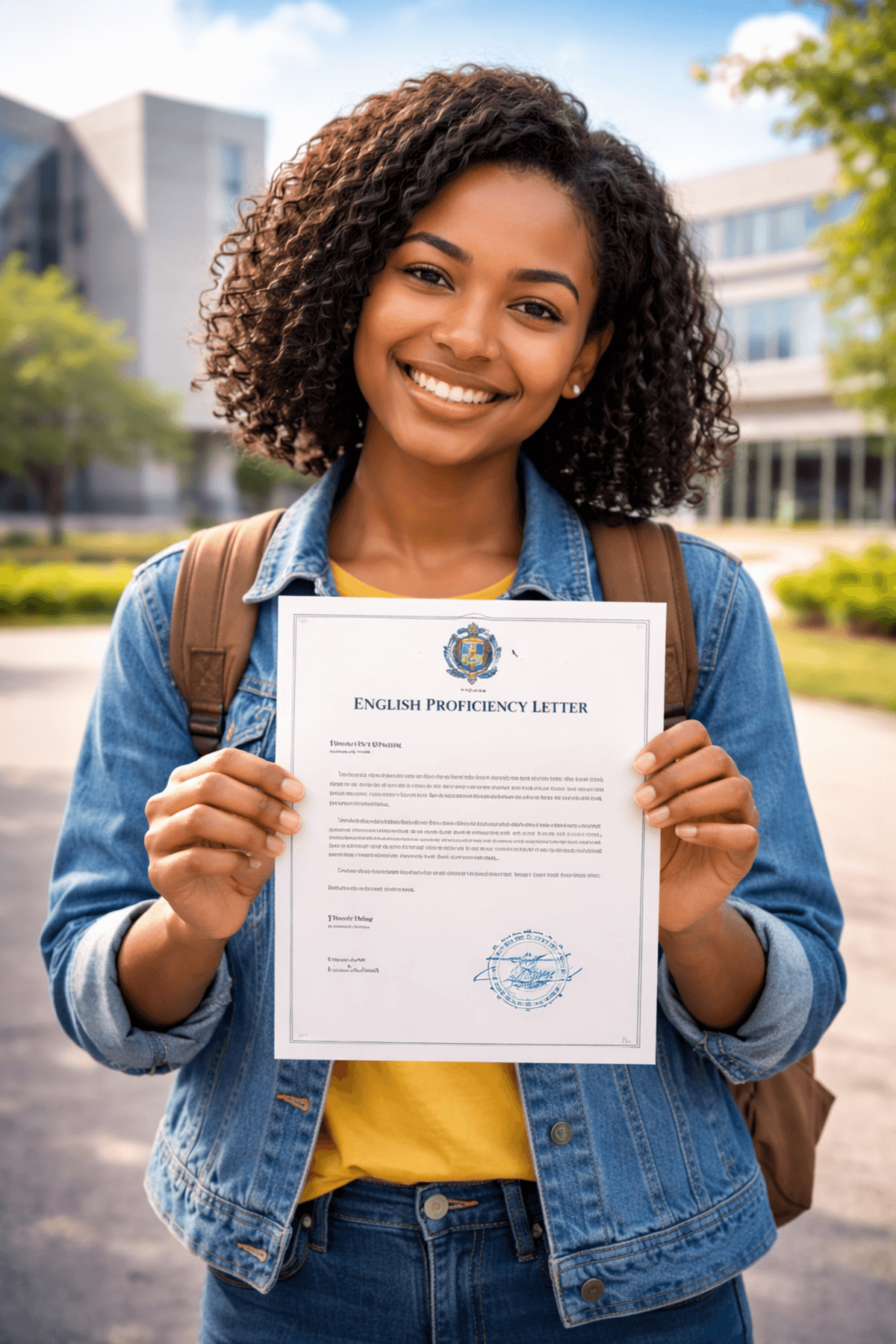
If you’re wondering how to get an English proficiency letter, you’re not alone. Thousands of students need this document every year to study abroad without IELTS. An English Proficiency Letter—also called a Medium of Instruction (MOI) Certificate—is an official document issued by your university confirming that your program was taught in English.
It is widely used as an alternative to IELTS or TOEFL for admission and scholarships.
In simple terms:
It proves you already studied in English, so you don’t need another test.
Table of Contents
Why You Need an English Proficiency Letter
The document can:
- Help you study abroad without IELTS
- Save money on expensive English tests
- Speed up your application process
- Increase your chances of scholarship approval
Many government scholarships (like CSC, DAAD, and Türkiye Burslari) accept this document.
Why Universities Accept It
Universities don’t actually care about IELTS—they care about your ability to study in English.
If your degree was:
- Taught in English
- Assessed in English
- Completed in an English-speaking academic environment
Then many institutions consider that sufficient proof.
Some universities even allow:
- MOI letter
- Transcripts showing English
- Academic background in English-speaking countries
Where Is an English Proficiency Letter Accepted?
Many students asking how to get an English proficiency letter also want to know where it works.
Common countries that accept MOI:
- China
- Germany
- Turkey
- Hungary
- South Korea
Important: Acceptance depends on the university, not just the country.
How to Get an English Proficiency Letter Step-by-Step
This is the exact process most successful applicants follow:
Step 1: Contact Your University Office
To get an English proficiency letter, you need to contact:
- Registrar office
- Academic office
- Exams and records department
These are the only authorized bodies that can issue the letter.
Step 2: Confirm Your School Issues MOI
Some universities don’t call it “English proficiency letter.”
It may be listed as:
- Medium of Instruction Certificate
- MOI Letter
- English Language Confirmation
Step 3: Prepare Your Information
Before requesting, gather:
- Full name
- Student ID or matric number
- Course studied
- Graduation year
- Reason for request
Step 4: Submit a Formal Request
You can request the letter by:
- Physical application
- Online portal (if available)
Make sure your request clearly states that you need proof that your program was taught in English.
Step 5: Ensure the Letter Meets Requirements
A valid English proficiency letter must:
- Be printed on official letterhead
- Include signature and stamp
- Clearly state:
“The medium of instruction was English”
Without this, your application may be rejected.
Step 6: Collect and Scan the Letter
After receiving the letter:
- Scan it in high quality (PDF format)
- Keep both digital and hard copies
- Use it for multiple applications
Download a Free Template Here: How to Get an English Proficiency
How to Use an English Proficiency Letter to Study Abroad Without IELTS
Once you get your letter, you can:
- Upload it during university application
- Use it for scholarship applications
- Submit it as proof of English proficiency
In some cases, it may also support your visa application.
Common Mistakes to Avoid
Avoid these errors:
- Submitting a letter without stamp or signature
- Using a fake or edited document
- Missing the “English medium” statement
- Uploading a blurry scan
These mistakes can lead to rejection.
Conclusion
Now that you understand how to get an English proficiency letter, you have a powerful alternative to IELTS. This simple document can open doors to scholarships, university admissions, and global opportunities—without the stress and cost of English exams.
About Author
